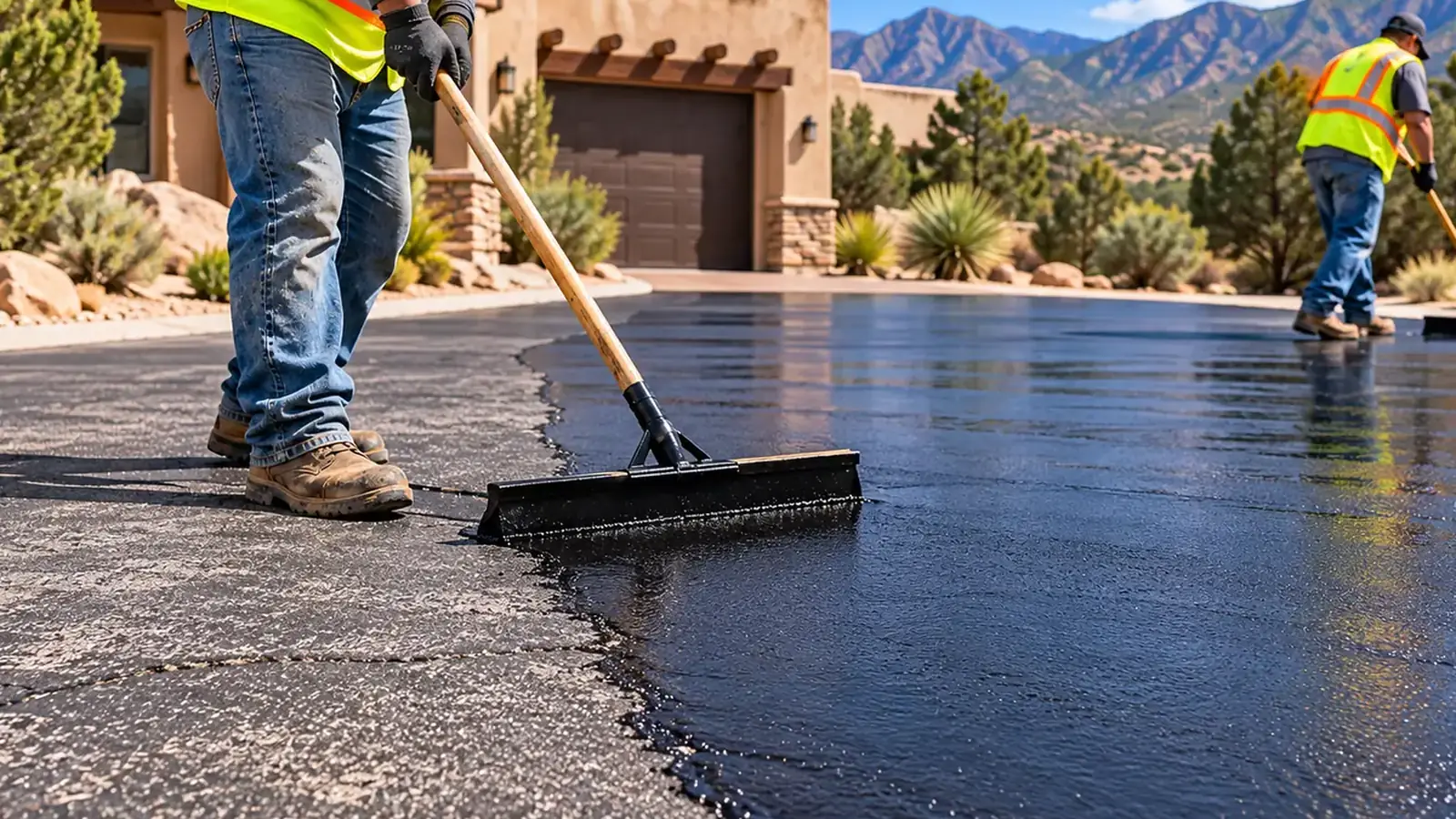
What sealcoat does
The binder holding asphalt together slowly oxidizes in the sun. At 5,000–6,500 feet that happens faster, which is why driveways go gray and start shedding stone. Sealcoat is a protective layer that blocks UV, sheds water and resists oil and fuel. It doesn't add strength or fix cracks — that's what crack sealing and repair are for, and we do both before coating.
Every sealcoat job includes
- Edge trimming and a full sweep and blow-off
- Cleaning and priming oil spots
- Hot-pour crack sealing
- Hand-cut borders at the garage, walks and landscaping
- Two full, even coats of commercial sealer with sand for traction
- Barricades and written cure-time instructions
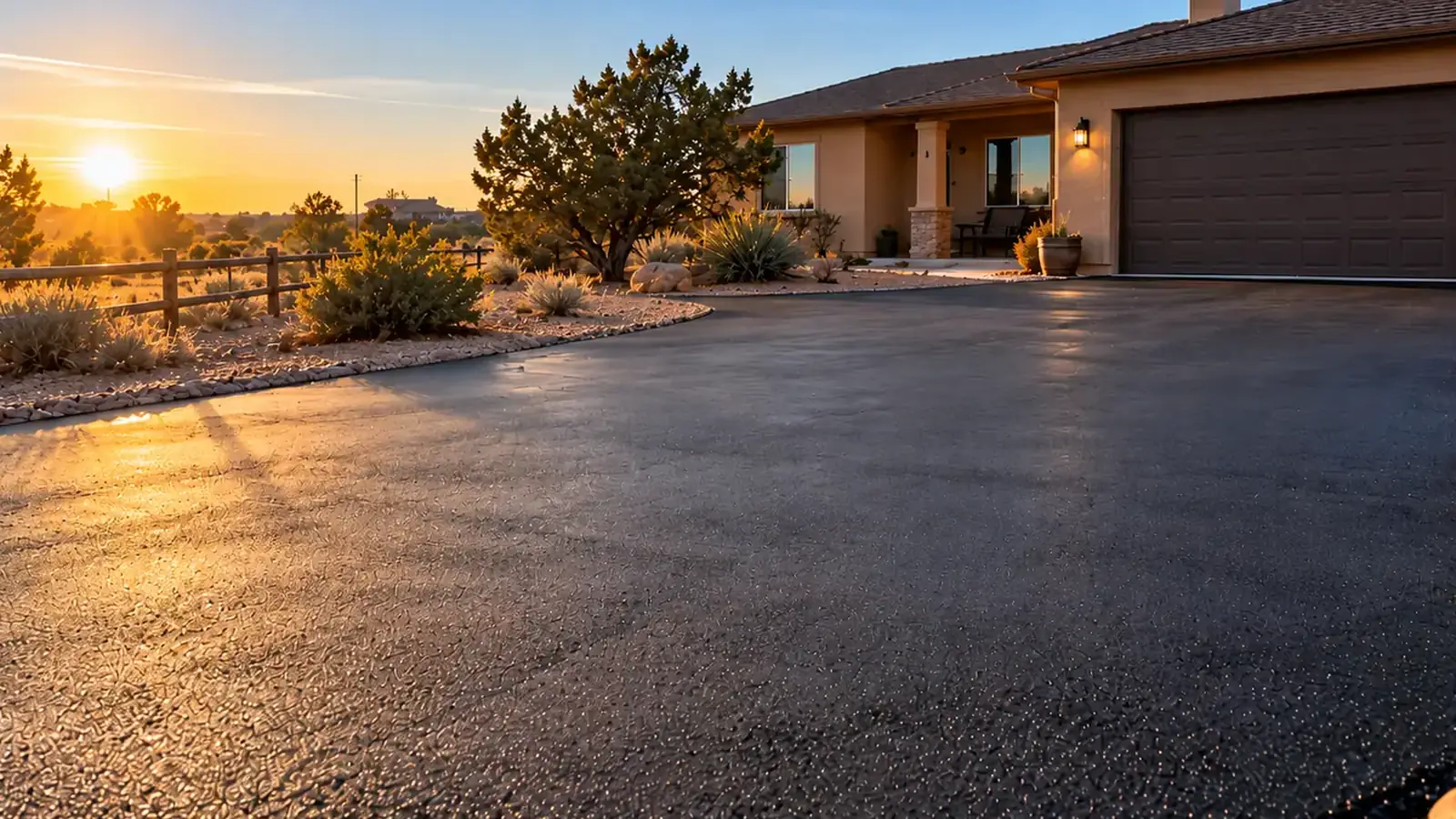
When
- New asphalt: wait 6–12 months.
- After that: about every 2–3 years.
- Weather: around 50°F and rising, dry, no rain or freeze for a day, and not too windy. In the foothills that's roughly late spring to early fall.
Long, steep drives get extra attention for runoff — we avoid coating when a storm is likely within the cure window. See sealcoating in Placitas.
Questions & answers
How soon can I drive on it?
Usually after 24–48 hours depending on temperature.
Do you fill cracks first?
Always.
How often should I reseal?
About every 2–3 years for most driveways.