Two kinds of ground
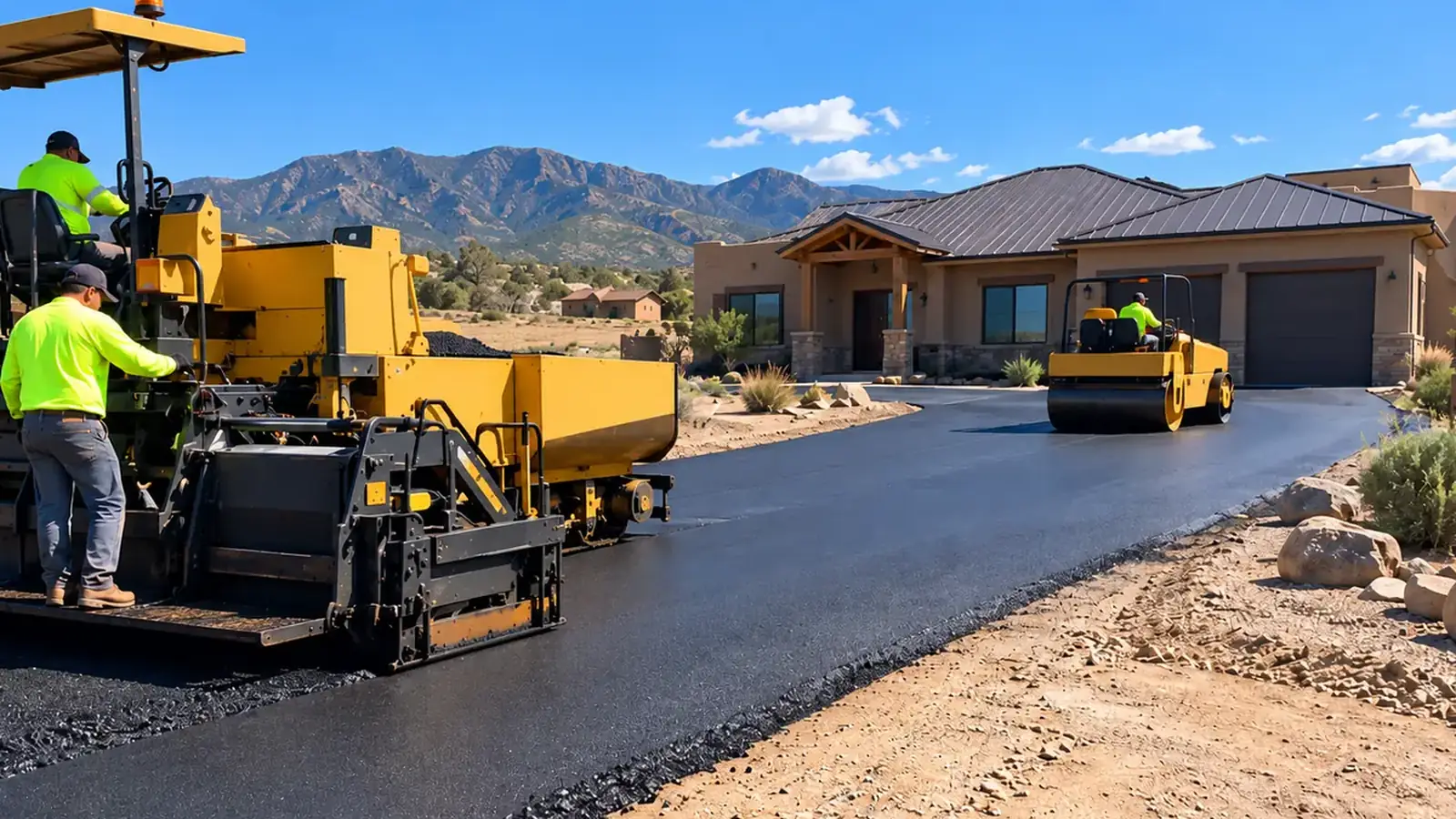
Our service area covers two very different kinds of ground. Up in Placitas and along the Turquoise Trail, soil is rocky and sandy with clay pockets, on slopes that send water downhill fast. Down in the Rio Grande valley in Bernalillo and Algodones, ground is flatter and siltier, and water tends to sit. A good driveway handles whichever one you have.
Foothill lots
Firm native ground but steep grades, rock outcrops and runoff. Focus: cut to solid ground, control the water, support the edges.
Valley lots
Flat ground and softer, siltier soil. Focus: remove soft material, build a thicker base, and create slope so water leaves.
The build
- Layout and walk-through. Shape, width, where you park and turn, and where every storm's water goes.
- Excavation. Topsoil, roots, loose fill and soft spots come out.
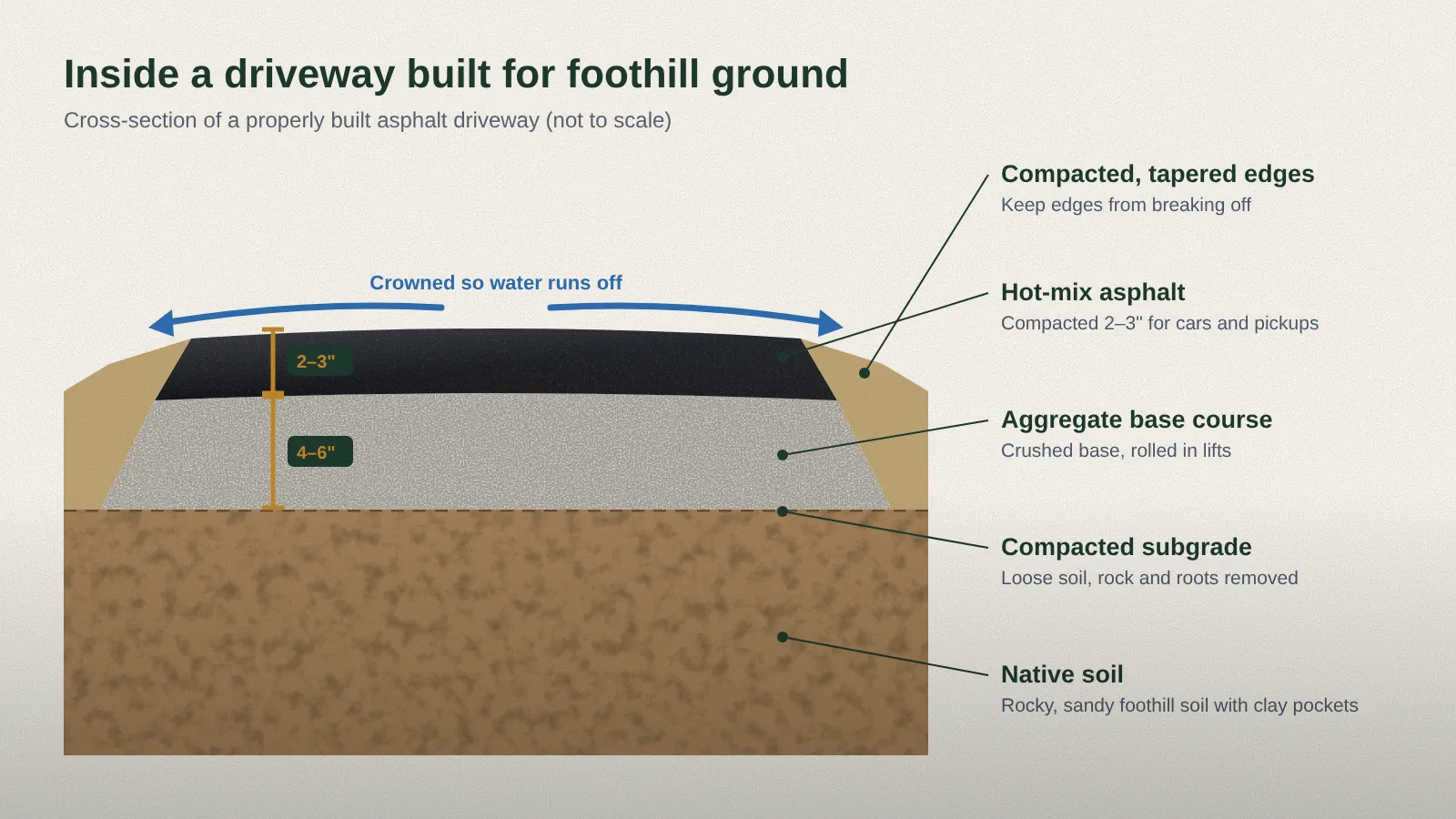
- Grade. A crown or cross-slope, plus ditches, rundowns or culverts as the lot needs.
- Base course. Crushed aggregate base, watered and rolled in lifts — typically 4–6 inches for homes, more for heavy vehicles or soft ground.
- Asphalt. Hot-mix compacted to 2–3 inches for most homes, thicker where trucks and trailers go.
- Finish. Compacted edges, smooth tie-ins at the road and garage, and cure-time instructions.
Driving distance and timing
Hot-mix has to arrive hot, and Placitas and the Turquoise Trail are a haul from the plant. We schedule paving on warm days in the main season — roughly late spring through early fall — and plan crews and trucks so the mix goes down at the right temperature. Typical costs are in our Placitas cost guide.
Questions & answers
How thick should a new driveway be?
Most homes get 4–6 inches of compacted base and 2–3 inches of compacted asphalt. Heavy vehicles or soft ground call for more.
How long will it last?
With good base, drainage and sealcoating every few years, 20 years or more is common.
When can I drive on it?
Usually after 2–3 days. Avoid heavy trucks and sharp turns while parked for the first few weeks.