Overlay or replace?
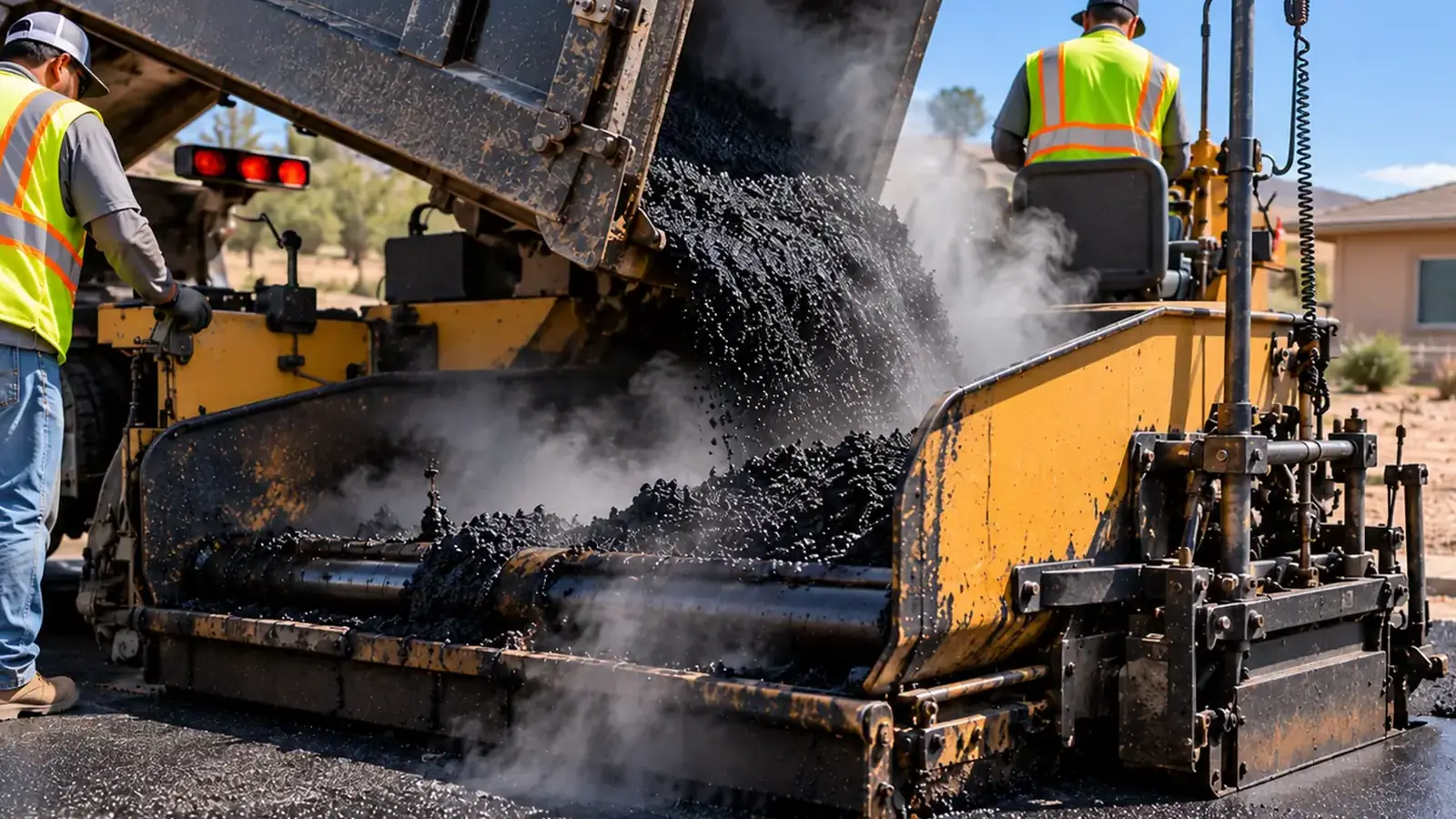
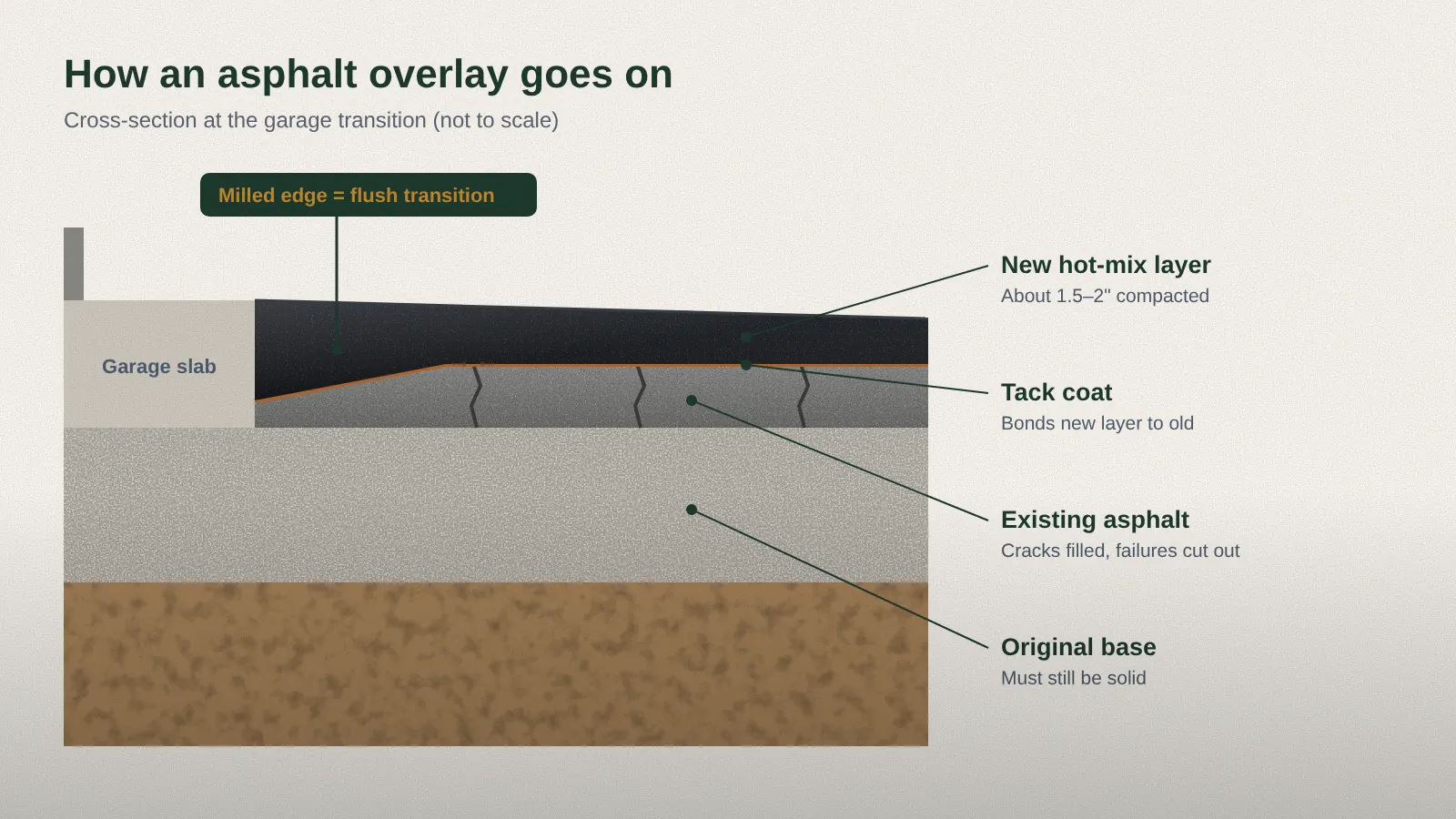
An overlay is a fresh layer of hot-mix on top of existing asphalt. It's the right fix when the problem is the surface — faded, rough, lightly cracked — and the base underneath is still solid. If the base has failed, cracks come right back through.
| Overlay works | Repair or replace first |
|---|---|
| Gray, rough, raveling surface | Alligator cracking over large areas |
| Scattered narrow cracks | Sunken areas, ruts, sliding edges |
| A few small potholes | Pavement that flexes underfoot |
| Drains normally | Water runs under the asphalt |
Our overlay process
- Repair failures full-depth first.
- Seal cracks so fewer reflect through.
- Mill edges at the garage, walks and road so the new layer finishes flush.
- Tack coat so the new layer bonds.
- Pave about 1.5–2 inches compacted for driveways; more for lots.
On slopes
Older hillside drives often have failed edges on the downhill side. We rebuild those edges with compacted shoulder support before overlaying, or the new layer breaks off in the same place.
Questions & answers
How long does an overlay last?
Often 10–15 years or more on a sound base, with sealcoating.
Will it raise the driveway at my garage?
Not when the edges are milled first.
Can you overlay alligator cracking?
Only after those areas are cut out and rebuilt.