The quick comparison
| Asphalt | Chip seal | Concrete | Millings / gravel | |
|---|---|---|---|---|
| Stays put on a grade | Very good | Good on moderate grades | Very good | Poor — washes out |
| Traction | Good | Very good | Good with broom finish | Fair; loose on top |
| Cost | Moderate | Lower | Highest | Lowest |
| Repairs | Easy to patch | Re-coat | Hard to patch neatly | Regrade often |
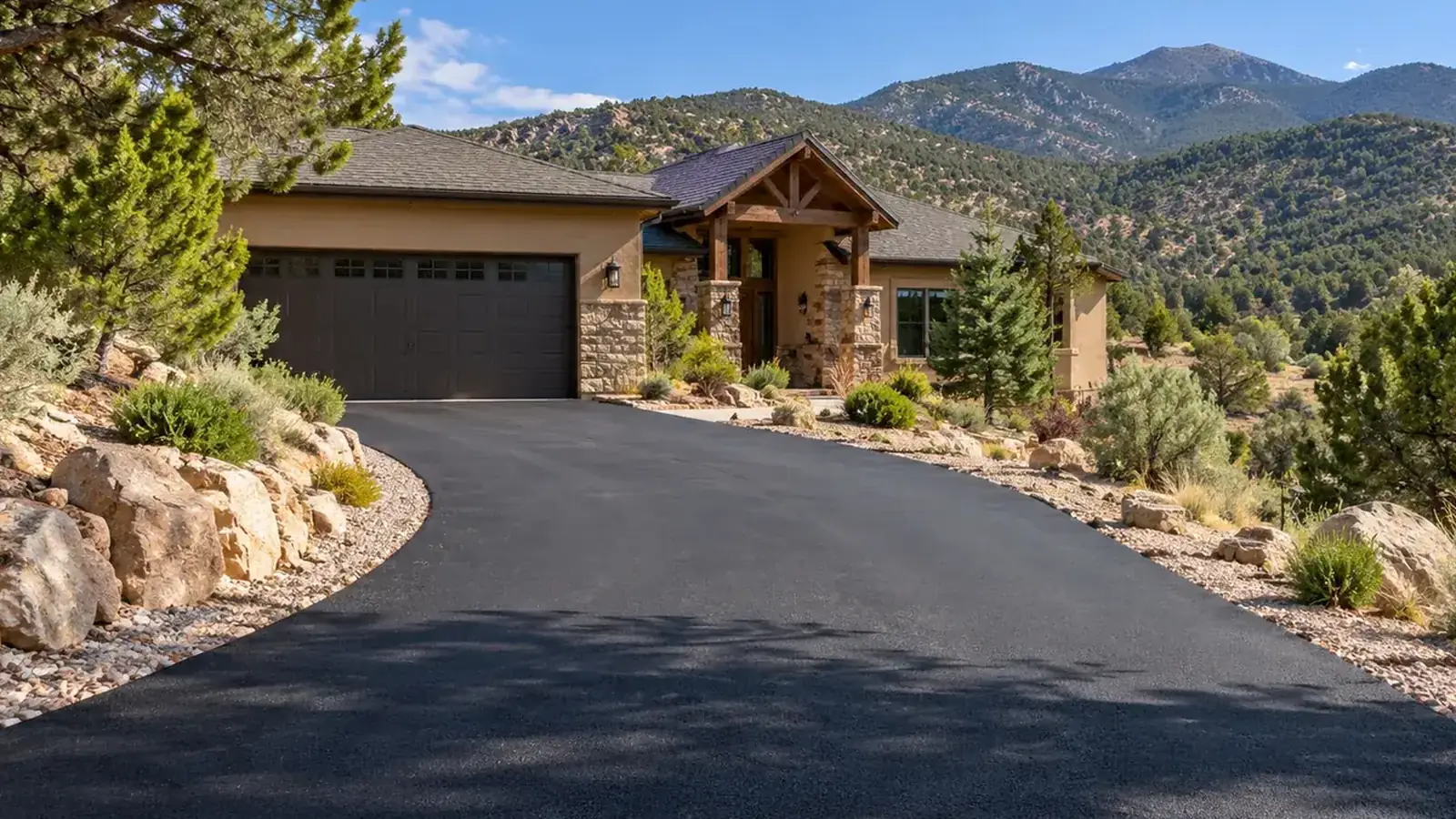
| Look in the foothills | Black, clean | Natural stone | Light gray | Natural |
What we usually recommend
- Steepest pitches: asphalt (or concrete if budget allows).
- Moderate stretches: chip seal for cost and looks.
- Flat parking areas: asphalt; millings for overflow and trailers.
- Not on grades: loose gravel or millings — they end up at the bottom of the hill.
The surface is only half of it
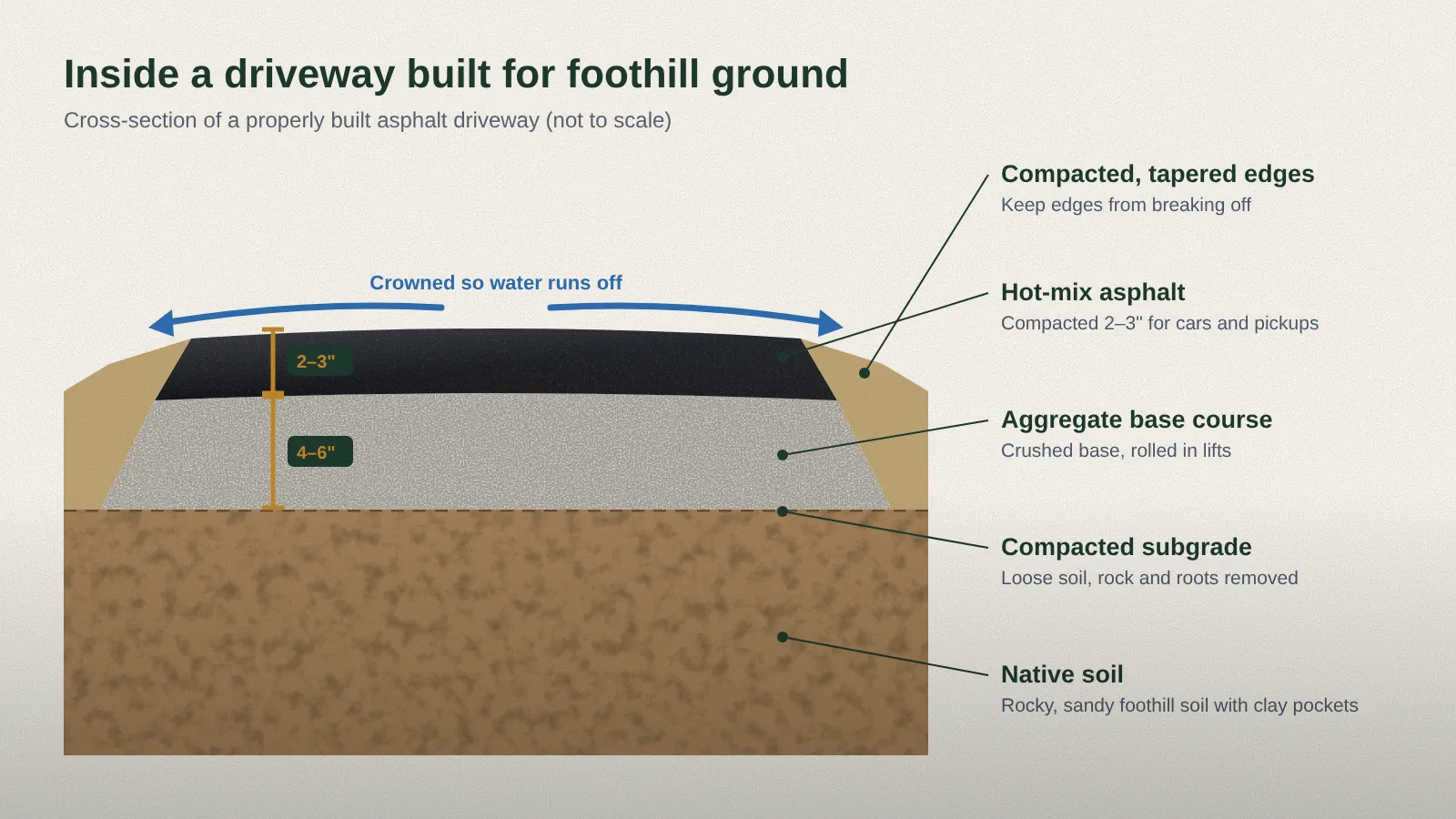
On any steep drive, drainage decides lifespan. An uphill ditch, a slight cross-slope, protected outlets and a supported downhill edge will do more for a steep drive than any material upgrade. See culverts and drainage.
Winter
Any surface can ice on a shaded grade. Good drainage keeps meltwater from refreezing across the drive. Keep traction sand handy; avoid chemical de-icers on new asphalt and concrete.
Questions & answers
Is concrete better than asphalt on a steep drive?
Both work well on grades. Concrete costs more and is harder to repair; asphalt is easier to patch and usually less expensive.
Can I use chip seal on a steep drive?
On moderate grades, yes. On the steepest sections, spinning tires can scuff it loose.
Why does my gravel end up at the bottom?
Water and tires move it downhill. On a grade, gravel needs a bound surface or it keeps migrating.