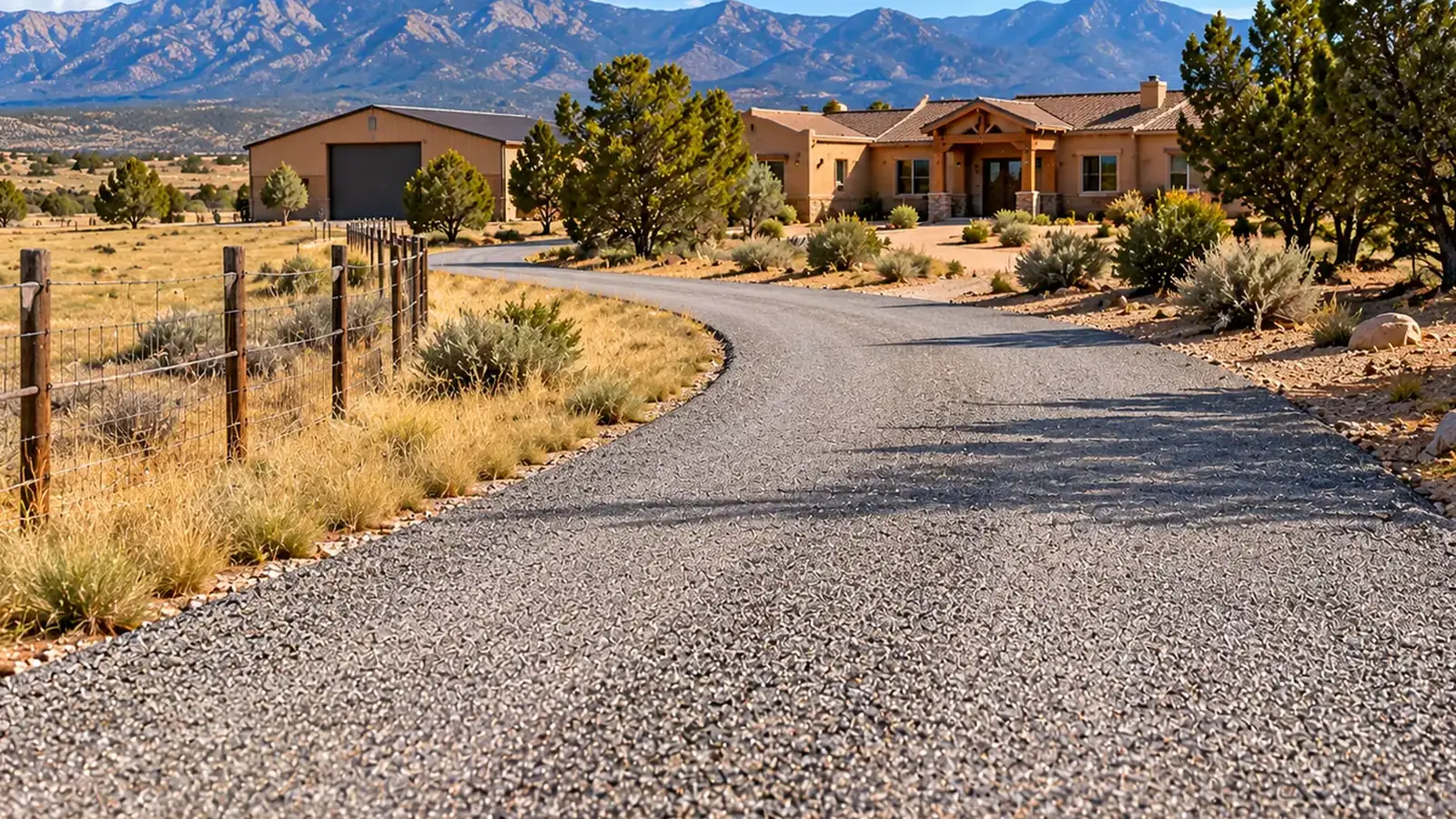
What chip seal is
Chip seal is built by spraying hot liquid asphalt over a prepared, compacted base and immediately spreading crushed stone over it, then rolling the stone in. The asphalt binds the stone and seals the surface. Two layers — a "double chip seal" — is the usual build when going from gravel or dirt.
Why it suits this area
- Looks right. The stone texture and color blend with foothill and high-desert landscapes.
- Cost. Considerably less per square foot than hot-mix — a big deal on a long road.
- Traction. The stone surface grips well.
- No dust, no ruts. A sealed surface instead of loose material.
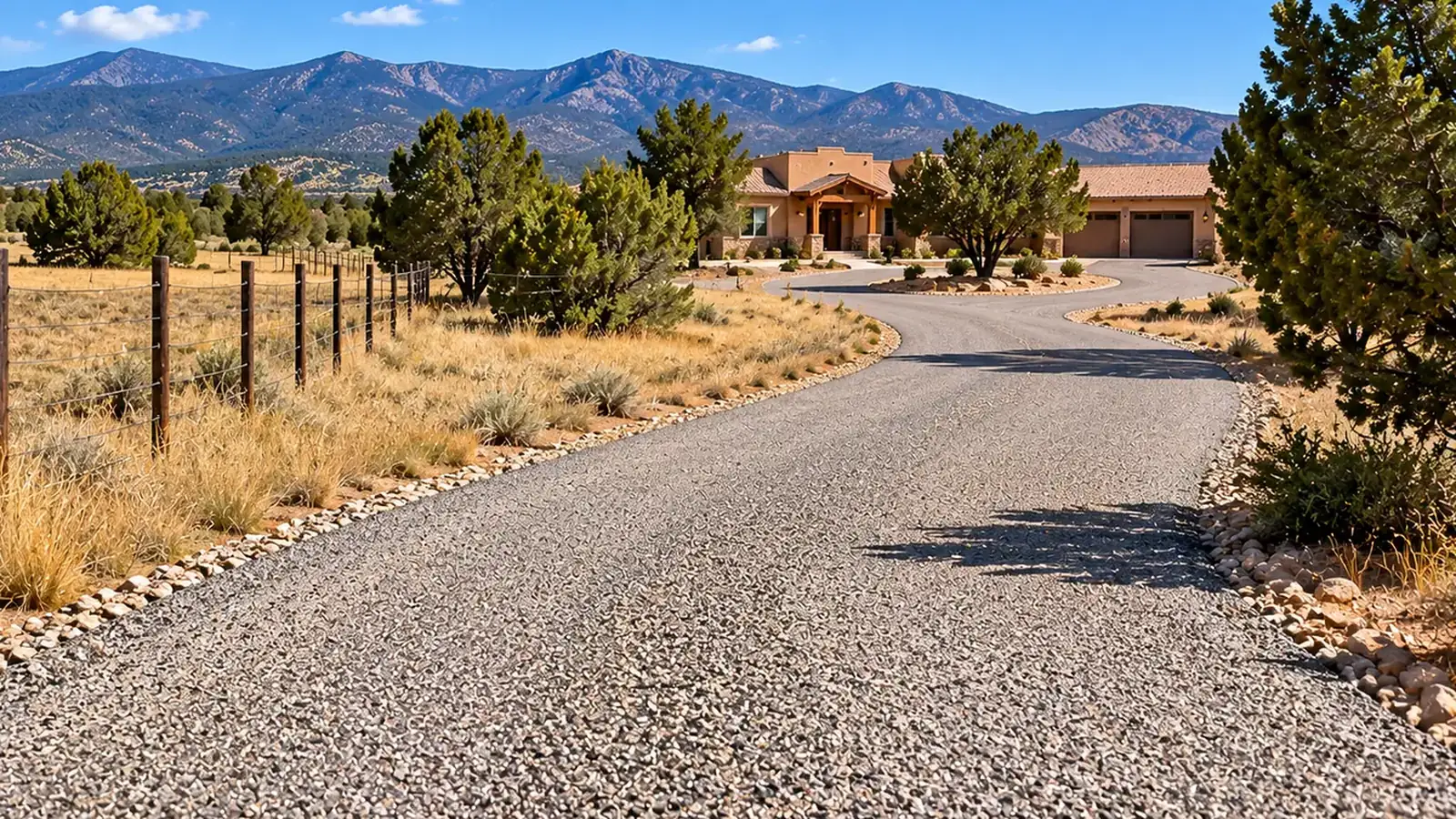
Where it doesn't fit
Chip seal doesn't love tight turning — power steering at a standstill can scuff stone loose — and it isn't as smooth as asphalt. On very steep pitches, spinning tires can loosen it. That's why many owners put asphalt on the steep part and at the parking area, and chip seal on the rest.
Our process
- Grade, crown and compact the base; fix drainage and crossings
- Spray hot asphalt binder at the right rate for the stone
- Spread clean crushed stone right behind it
- Roll to seat the stone
- Sweep loose stone after it cures
Renewal coats every several years keep it sealed. More on chip seal in Placitas.
Questions & answers
How long does chip seal last?
A well-built double chip seal commonly lasts several years before a renewal coat.
Will there be loose stone at first?
Some, for the first few weeks. We sweep the excess after it cures.
Can it be paved over later?
Yes. Chip seal makes a good base for a future asphalt layer.