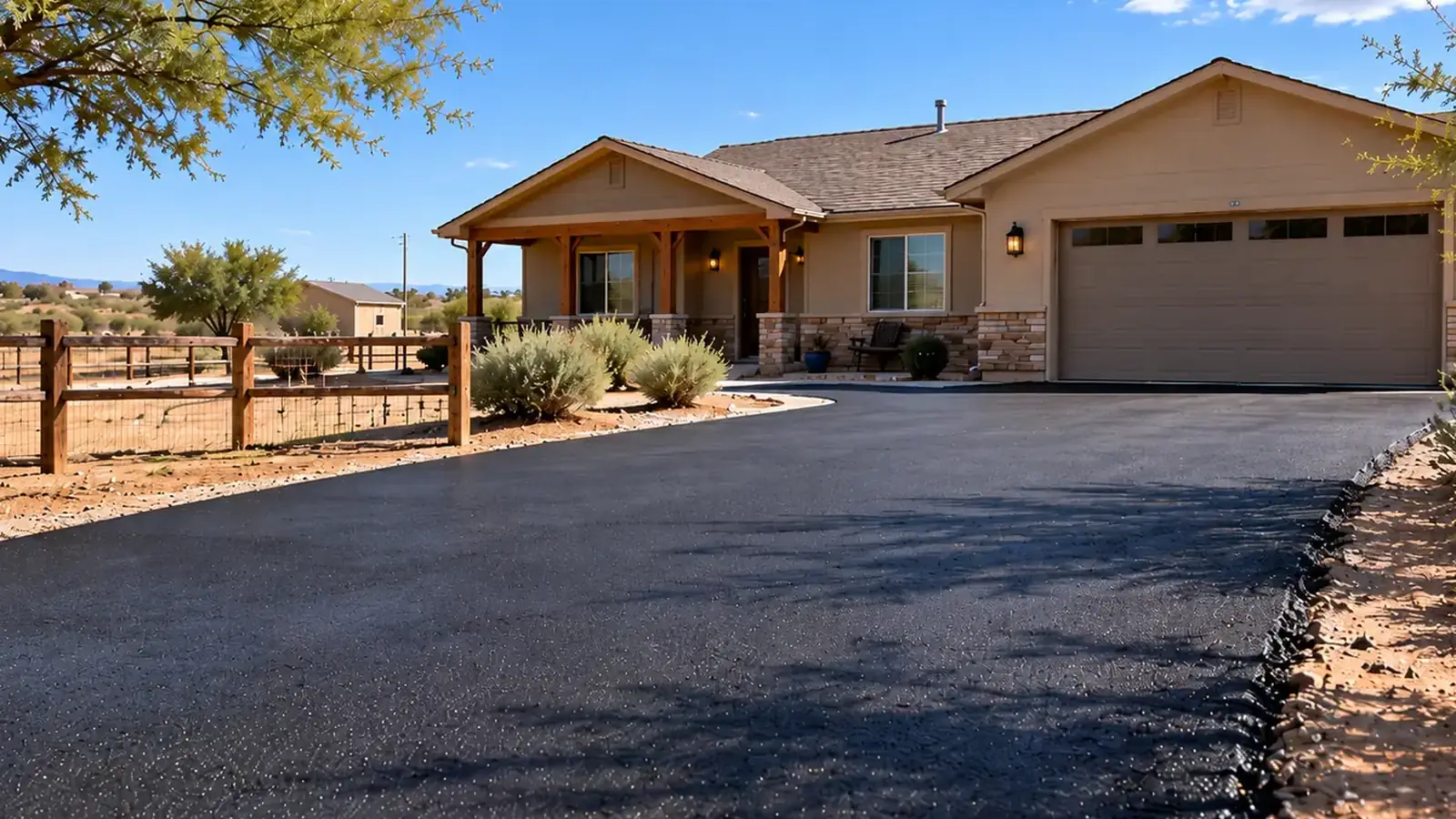
The budget step up from gravel
Millings are the old asphalt ground off roads during resurfacing. They still contain some asphalt binder, so when they're spread, watered and rolled, they lock together into a surface that's firmer and much less dusty than gravel. Summer heat and traffic tighten them up over time.
Good places for millings
- Flatter stretches of long driveways
- Horse property lanes, barn approaches and arena access
- Trailer, RV and equipment parking
- Shoulders beside asphalt driveways for edge support
- Overflow parking and turnarounds
Not on steep grades
On steep foothill pitches, runoff can still move millings. Those sections are better in asphalt or chip seal.
Installed, not dumped
- Shape the subgrade with a crown and drainage
- Spread millings to an even depth
- Water and roll until tight
- Optional binder or sealer for a tighter surface
Questions & answers
Are millings as good as asphalt?
No — they're between gravel and asphalt. Firm and low-dust, but not as smooth or durable as new hot-mix.
Can I pave over them later?
Yes. Compacted millings make a good base.
Do millings work for horses?
Many owners use them for lanes and parking near barns. Compacted millings are firmer underfoot than loose gravel.