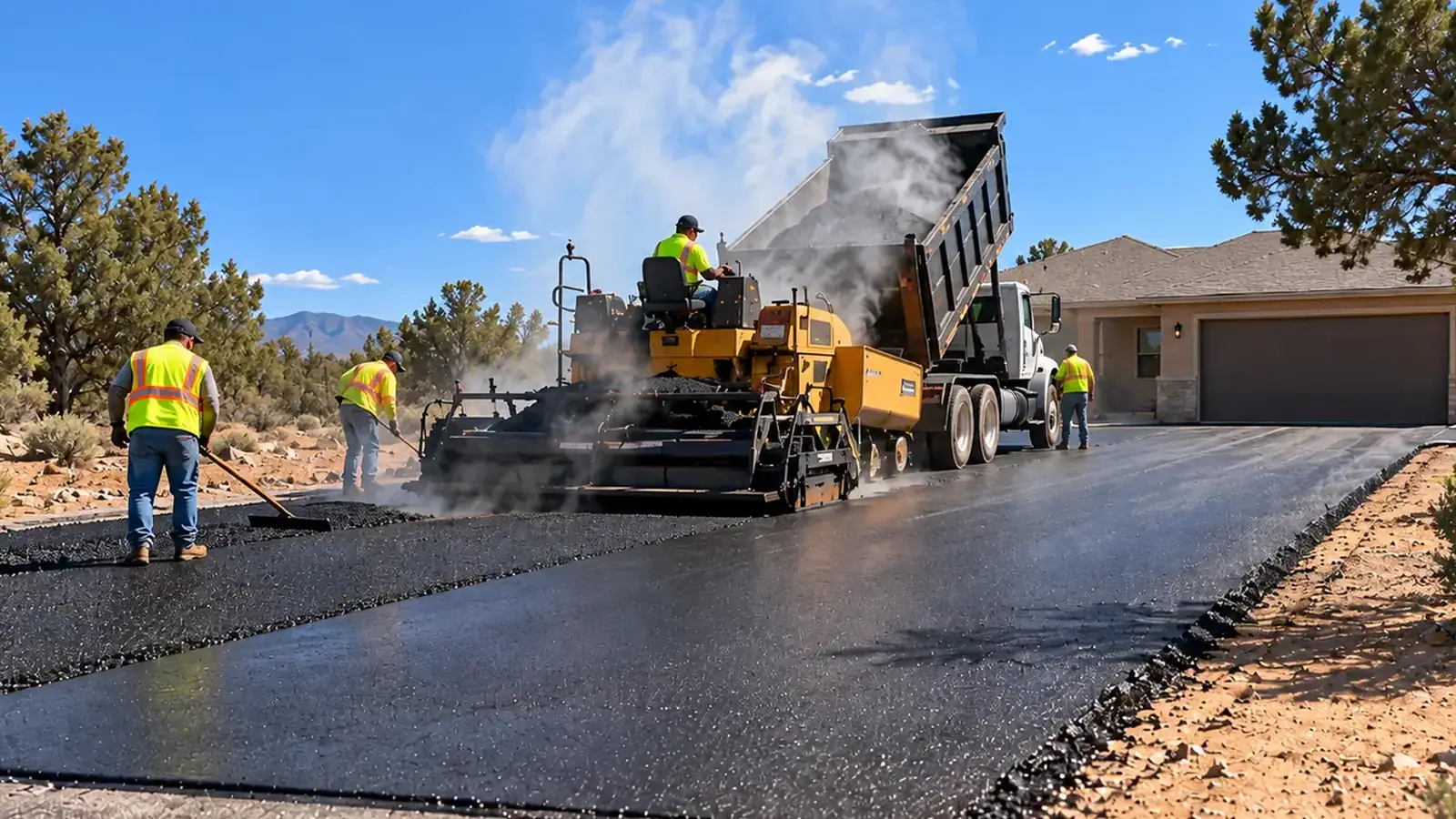
The gravel treadmill
Gravel is the default in Placitas and along the Turquoise Trail, and on flat ground it can work for years. On a slope, every storm moves it downhill, cuts ruts and leaves ridges of loose rock. Owners end up buying a load of gravel and hiring a tractor every year or two. Asphalt ends that cycle.
How the conversion works
- Assess the gravel. How deep, how clean, and how much has already migrated off the drive.
- Reuse what's sound. Clean, well-graded gravel becomes part of the new base — often a real savings.
- Fix the drainage that made the ruts. The same water that rutted the gravel will attack asphalt edges unless it gets a new path.
- Top up and compact. Fresh base where the old gravel is thin or dirty, then water and roll.
- Pave. Hot-mix, rolled, with tapered edges and supported shoulders.
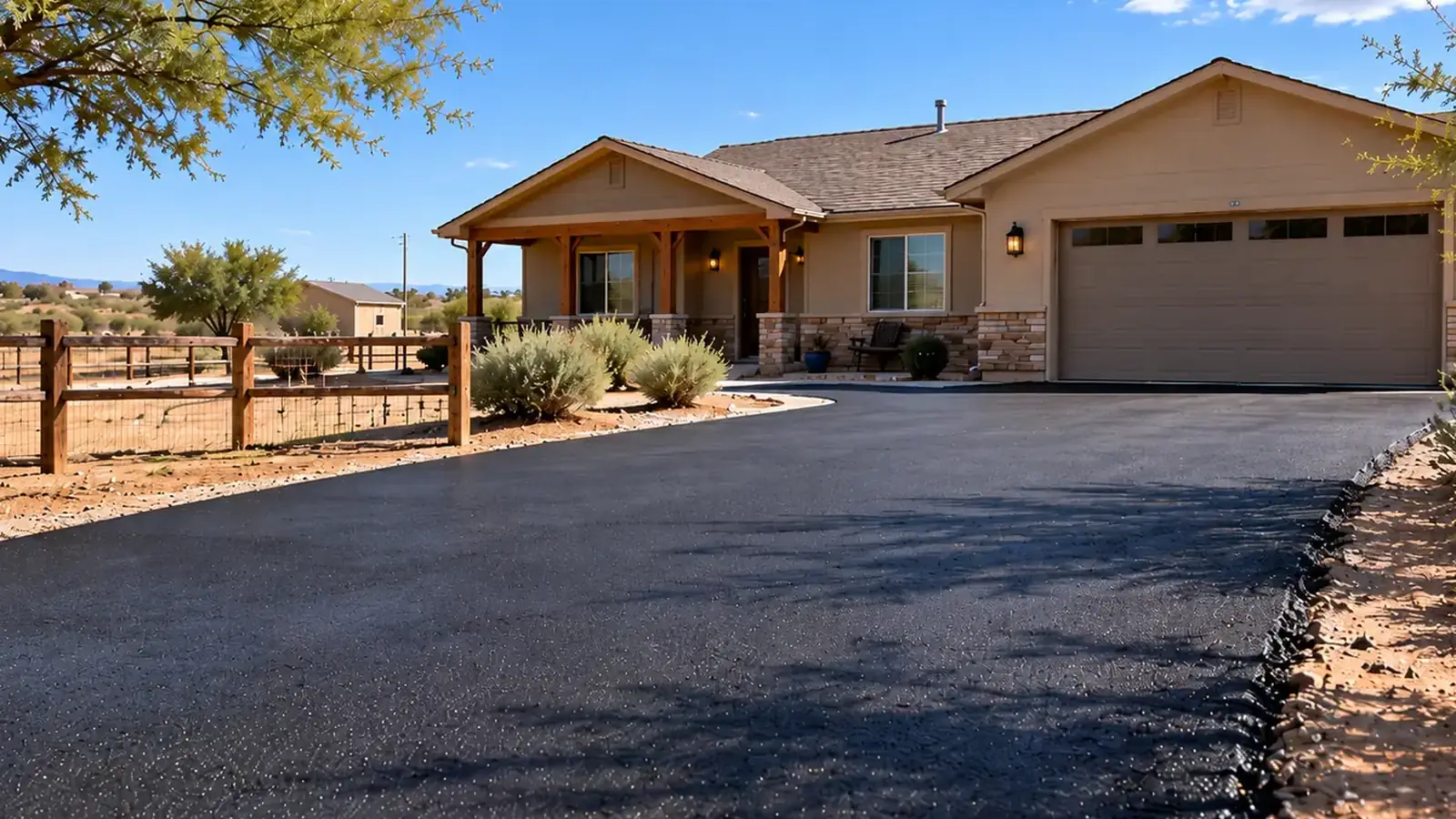
Long drives
For drives that run a long way to the road, many owners pave the steep sections and the area near the house, and use chip seal or recycled millings on the flatter parts. It's a practical way to fix the worst spots without paying for hot-mix on every foot.
Questions & answers
Can asphalt go right on top of my gravel?
Not loose gravel. It has to be regraded, topped up and compacted into a solid base first, or the asphalt cracks.
Is converting cheaper than starting fresh?
Often, when the existing gravel is clean enough to reuse as base.
Will asphalt fix my washouts?
Only if the drainage is fixed too. We redirect water as part of every conversion.